Best Digital Pianos by Skill Level in 2026: Beginner to Advanced
Choosing a digital piano becomes much easier when you stop asking:
“What is the best digital piano?”
and start asking:
“What digital piano is appropriate for my current playing level?”
A complete beginner doesn’t necessarily need the sophisticated keyboard action, premium sound system or professional performance controls that an advanced pianist may appreciate. At the same time, buying the cheapest keyboard available can be a false economy if you quickly outgrow it.
The goal is to find an instrument that suits your abilities today while giving you enough room to improve.
In this guide, we’ll look at six excellent digital pianos for different stages of a pianist’s development:
- Roland FP-10 — Best for Complete Beginners
- Yamaha P-225 — Best for Beginners Planning to Progress
- Roland FP-30X — Best for Intermediate Players
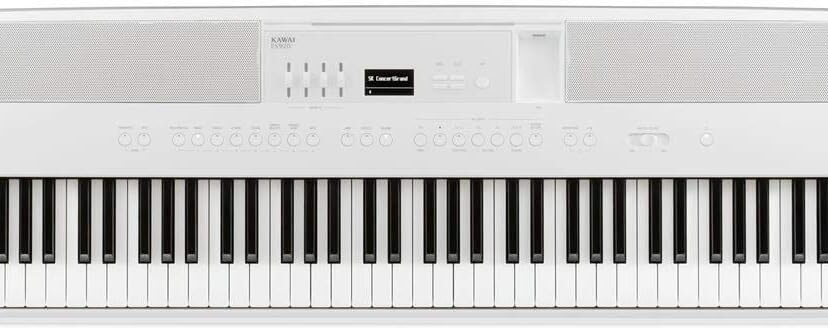
- Kawai ES920 — Best for Serious Piano-Focused Players
- Yamaha P-525 — Best for Advanced Pianists
- Nord Stage 4 88 — Best for Professional Performers
More importantly, we’ll explain why your needs change as your skills improve—and when upgrading your digital piano is actually worthwhile.
Disclosure: Some links on Pianos-Galore are affiliate links. If you purchase through these links, we may receive a small commission at no additional cost to you.
Digital Pianos by Skill Level: Quick Comparison
| Player Level | Recommended Model | Key Reason |
|---|---|---|
| Complete Beginner | Roland FP-10 | Proper weighted-key foundation at an accessible level |
| Beginner Planning to Progress | Yamaha P-225 | Excellent balance of quality, portability and room for growth |
| Intermediate | Roland FP-30X | Stronger long-term features and 256-note polyphony |
| Serious Piano-Focused Player | Kawai ES920 | More refined keyboard action and piano-focused experience |
| Advanced Pianist | Yamaha P-525 | Premium action and sophisticated piano sounds |
| Professional Performer | Nord Stage 4 88 | Piano, organ, synth and extensive stage controls |
The Short Version
Just starting piano? → Roland FP-10
Beginner but serious about improving? → Yamaha P-225
Already progressing into intermediate repertoire? → Roland FP-30X
Piano feel is becoming increasingly important? → Kawai ES920
Advanced pianist wanting a premium playing experience? → Yamaha P-525
Professional gigging musician? → Nord Stage 4 88
Why Your Digital Piano Needs Change as You Improve
Beginners and advanced pianists can technically play the same instrument.
But they don’t necessarily experience it in the same way.
A beginner may initially be concerned with:
- Learning note locations
- Reading music
- Developing hand coordination
- Basic dynamics
- Scales
- Simple chords
- Establishing regular practice habits
As technique develops, more subtle characteristics become noticeable.
An intermediate or advanced pianist may become increasingly sensitive to:
- Key resistance
- Repetition
- Dynamic control
- Pedaling
- Sound decay
- Resonance
- Tone variation
- Speaker quality
- Expressive response
This explains why an inexpensive digital piano may seem perfectly satisfactory during your first year but eventually begin to feel limiting.
The piano hasn’t necessarily become worse.
You’ve become a better pianist.
Your ability to detect its limitations has improved.
Digital Pianos in 2026: The Complete Guide Before You Buy
Level 1: Complete Beginner
Roland FP-10 — Best Digital Piano for Complete Beginners
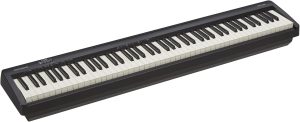
The Roland FP-10 is an excellent starting point for someone who wants to learn piano properly rather than simply experiment with a keyboard.
Its most important feature is not a huge library of sounds or complicated technology.
It’s the keyboard.
The FP-10 provides:
- 88 keys
- PHA-4 Standard keyboard
- Hammer action
- Escapement
- Ivory Feel key surfaces
- SuperNATURAL Piano sound
- 96-note polyphony
- Built-in speakers
- Headphone capability
- Bluetooth MIDI
- USB connectivity
- Twin Piano mode
For a beginner, that’s a strong foundation.
Why Weighted Keys Matter for Beginners
A common mistake is assuming that beginners don’t need weighted keys because they aren’t yet skilled enough to appreciate them.
The opposite argument is more useful.
Beginners are precisely the people who are developing their technique from scratch.
Weighted keys help the student learn:
- Finger control
- Dynamic control
- Appropriate key pressure
- Hand coordination
- The physical feel of piano playing
A lightweight keyboard can still teach you notes, chords and music theory.
But if your goal is traditional piano playing, an 88-key hammer-action instrument provides a better physical foundation.
88 Weighted Keys: Do You Really Need Them on a Digital Piano?
Is the Roland FP-10 Enough for Several Years?
For many players, yes.
You don’t need to upgrade simply because you’ve completed your first year of lessons.
The FP-10 can continue serving a developing pianist well beyond the absolute beginner stage.
Its main limitations become more relevant when you begin wanting:
- More powerful speakers
- Greater polyphony
- More connectivity
- More sounds
- More sophisticated onboard features
But none of those automatically prevents you from learning piano.
Who Should Buy the Roland FP-10?
Choose it if:
- You’re completely new to piano.
- You want 88 weighted keys.
- Piano feel matters more than having hundreds of sounds.
- You want a compact home instrument.
- You don’t want to spend heavily before knowing how committed you’ll become.
[Check Roland FP-10 Price on Amazon →]
Level 2: Beginner Who Plans to Progress
Yamaha P-225 — Best Long-Term First Digital Piano
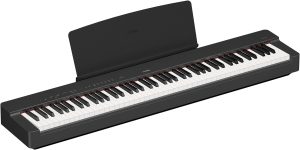
Not every beginner should buy the least expensive suitable instrument.
Suppose you’ve already decided:
“I’m serious about learning piano, and I expect to continue for years.”
In that situation, spending somewhat more on your first piano can make sense.
That’s where the Yamaha P-225 becomes particularly attractive.
It includes:
- 88 Graded Hammer Compact keys
- Yamaha CFX concert-grand sound
- VRM Lite
- 192-note polyphony
- 24 voices
- Dual mode
- Split mode
- Duo mode
- USB audio/MIDI
- Optional three-pedal capability
- Compact dimensions
- Approximately 25.4 lb / 11.5 kg weight
Why the P-225 Makes Sense for a Serious Beginner
The P-225 occupies a useful middle ground.
It’s not so expensive that you’re paying heavily for professional capabilities you don’t need.
But it offers enough quality that you’re unlikely to feel compelled to replace it immediately as your playing improves.
Its 88-key GHC action allows proper piano practice, while the Yamaha CFX piano voice gives the instrument a strong acoustic-piano identity.
192-Note Polyphony
Beginners sometimes become overly concerned about polyphony.
Don’t.
You don’t need 192-note polyphony to play beginner pieces.
However, greater polyphony provides more headroom as you progress into:
- More complex repertoire
- Sustain-heavy music
- Layered sounds
- More sophisticated arrangements
It’s a useful long-term feature rather than a beginner necessity.
Who Should Buy the Yamaha P-225?
Choose it if:
- You’re a beginner who expects to continue playing.
- You want a piano that can grow with you.
- Portability matters.
- You value Yamaha’s CFX piano sound.
- You want more long-term capability than a basic entry-level model.
Best Digital Pianos for Beginners in 2026: 7 Top Picks for Learning Piano
[Check Yamaha P-225 Price on Amazon →]
Level 3: Intermediate Player
Roland FP-30X — Best Digital Piano for Intermediate Players
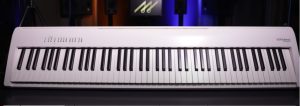
The intermediate stage is where choosing a digital piano becomes particularly interesting.
You’re no longer simply learning where the notes are.
You’re developing:
- Greater dynamic control
- More sophisticated pedaling
- Faster passages
- Better articulation
- More demanding repertoire
- Stronger musical interpretation
This is also when differences between digital pianos can become easier to feel.
The Roland FP-30X offers:
- 88 PHA-4 Standard keys
- Hammer action
- Escapement
- Ivory Feel surfaces
- SuperNATURAL Piano sound
- 256-note polyphony
- 11W + 11W speakers
- Bluetooth audio
- Bluetooth MIDI
- USB audio/MIDI
- Twin Piano
- Optional three-pedal support
Why the FP-30X Fits the Intermediate Stage
The FP-30X combines a piano-oriented keyboard with considerably more capability than many entry-level instruments.
Its 256-note polyphony gives substantial headroom for complex playing and layered sounds.
The stronger onboard speaker system is also useful because improved playing makes sound quality increasingly important.
Should a Beginner Buy the FP-30X Immediately?
Certainly.
Skill levels aren’t rules.
A serious beginner can buy the FP-30X and potentially use it for years.
We’re calling it our intermediate recommendation because its combination of action, polyphony, speakers and connectivity makes particularly good sense for a pianist who has moved beyond the earliest learning stage.
Who Should Buy the Roland FP-30X?
Choose it if:
- You’re an intermediate pianist.
- You’ve outgrown a very basic digital piano.
- You want strong polyphony.
- You value Roland’s PHA-4 action.
- Bluetooth connectivity is useful.
- You want an instrument with considerable room for further development.
[Check Roland FP-30X Price on Amazon →]
If Yamaha is your preferred brand, we’ve also compared the strongest Yamaha choices for players moving into the intermediate stage.
Level 4: Serious Piano-Focused Player
Kawai ES920 — Best for Players Becoming More Sensitive to Piano Feel
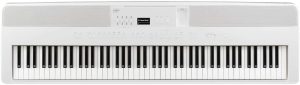
There comes a point in a pianist’s development when specifications such as “88 weighted keys” no longer tell the whole story.
Two digital pianos can both have 88 weighted keys and still feel noticeably different.
The Kawai ES920 is aimed at players who are beginning to care more deeply about those differences.
It features:
- 88-key Responsive Hammer III action
- Grade-weighted hammers
- Triple-sensor key detection
- Counterweights
- Let-off simulation
- Ivory Touch surfaces
- Harmonic Imaging XL piano sound
- 88-key stereo sampling
- 256-note polyphony
- Acoustic Rendering
- Virtual Technician adjustments
- Bluetooth MIDI
- Bluetooth audio
Why Action Matters More as You Improve
When you’re learning your first simple melodies, subtle differences in action may not seem important.
As you progress, you may become more aware of:
- Repetition speed
- Control at soft dynamics
- Resistance differences
- Key return
- Fine control over phrasing
The ES920’s Responsive Hammer III action incorporates features such as triple sensors, counterweights and let-off simulation that are intended to provide a more sophisticated playing experience.
Why Kawai Appeals to Piano-Focused Players
Some digital instruments emphasize:
- Hundreds of sounds
- Accompaniment
- Production tools
- Performance controls
Kawai’s ES920 places considerable emphasis on the piano experience itself.
That makes it especially interesting to:
- Serious students
- Classical players
- Piano teachers
- Experienced home pianists
- Players accustomed to acoustic pianos
Who Should Buy the Kawai ES920?
Choose it if:
- You’re serious about piano practice.
- Keyboard action has become increasingly important to you.
- You want premium quality while retaining portability.
- You primarily care about piano rather than workstation-style features.
- You’re an intermediate-to-advanced player.
Best Kawai Digital Pianos 2026: Which Model Is Right for You?
[Check Kawai ES920 Price on Amazon →]
Level 5: Advanced Pianist
Yamaha P-525 — Best Digital Piano for Advanced Players
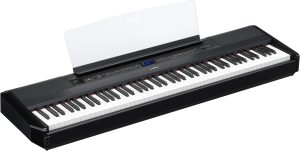
Advanced pianists can expose weaknesses in a digital piano that beginners may never notice.
At this level, you’re more likely to care about:
- Fine dynamic control
- Key response
- Repetition
- Tone variation
- Resonance
- Pedaling
- Expressive nuance
The Yamaha P-525 is designed with experienced players in mind.
It includes:
- 88-key GrandTouch-S keyboard
- Wooden white keys
- Synthetic ebony and ivory keytops
- Escapement
- Yamaha CFX concert-grand voice
- Bösendorfer Imperial concert-grand voice
- Virtual Resonance Modeling
- Grand Expression Modeling
- 256-note polyphony
- 44 voices
- Additional XG voices
- MIDI recording
- USB audio recording
- Optional three-pedal system
Advanced players who perform professionally may eventually need more than a conventional digital piano. Our look at the Nord Stage 4 for professional performers explains what its piano, organ, synth, layering and split capabilities add to a live setup.
GrandTouch-S Keyboard
This is one of the P-525’s most important advantages.
Yamaha’s GrandTouch-S action represents a substantial step above the simpler actions used in lower-priced portable instruments.
The wooden white keys and escapement contribute to a more sophisticated playing experience.
For an advanced pianist, these qualities can matter much more than an enormous list of extra voices.
CFX and Bösendorfer Imperial
The P-525 provides two contrasting premium concert-grand sounds.
The Yamaha CFX offers one tonal character, while the Bösendorfer Imperial provides another.
Advanced players may appreciate being able to choose between different piano personalities depending on:
- Repertoire
- Playing style
- Room
- Personal preference
Do Advanced Pianists Need a Digital Piano This Expensive?
Not necessarily.
A highly skilled pianist can make beautiful music on a modest instrument.
The question isn’t whether an advanced pianist can play an entry-level piano.
Of course they can.
The question is whether a better action, richer sound and greater expressive control improve the playing experience enough to justify the cost.
For many serious pianists, they do.
Who Should Buy the Yamaha P-525?
Choose it if:
- You’re an advanced pianist.
- Keyboard action is a major priority.
- You want premium acoustic-piano sounds.
- You practice demanding repertoire.
- You want a sophisticated instrument without buying a large console piano.
- You’re willing to pay for refinements that less experienced players may not yet appreciate.
Best Digital Pianos for Classical Music Practice
[Check Yamaha P-525 Price on Amazon →]
Level 6: Professional Performer
Nord Stage 4 88 — Best for Professional Stage Players
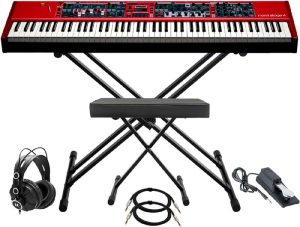
Becoming a professional musician changes the buying equation.
A professional performer may need capabilities that have little relevance to someone practicing Chopin at home.
That’s why the Nord Stage 4 88 belongs in a different category.
It combines:
- 88-key Triple Sensor Hammer Action
- Aftertouch
- Piano section
- Organ section
- Synthesizer section
- Nord Wave 2 synth engine
- Three independent synth layers
- 120-note piano polyphony
- 2 GB piano memory
- Multiple split zones
- Physical drawbars
- Extensive effects
- Morph controls
- MIDI
- USB MIDI
- Multiple professional audio outputs
Professional Doesn’t Simply Mean “Better Piano”
This distinction is important.
The Nord Stage 4 costs considerably more because it does considerably more.
But many of those capabilities aren’t necessary for traditional home piano practice.
A classical pianist may have little need for:
- Organ drawbars
- Synth layers
- Extensive stage effects
- Multiple performance zones
- Real-time morphing
A gigging keyboardist may consider them essential.
Why Professionals Pay for Real-Time Control
During a live performance, navigating through complicated menus isn’t ideal.
Professional stage keyboards emphasize immediate control.
A performer may need to move quickly from:
Grand piano → electric piano → organ → synth pad → layered sound
without interrupting the performance.
That’s the environment the Nord Stage 4 is designed for.
Who Should Buy the Nord Stage 4 88?
Choose it if:
- You’re a professional or serious gigging musician.
- You need piano, organ and synth sounds.
- You use complex splits and layers.
- You need real-time stage control.
- You need professional connectivity.
- You understand why these features matter to your work.
If you only want a great piano for your living room, you probably don’t need it.
Best Nord Keyboards in 2026: Which Nord Is Right for You?
[Check Nord Stage 4 88 Price on Amazon →]
When Should You Upgrade Your Digital Piano?
This is more important than an arbitrary rule such as:
“Upgrade after three years.”
Time alone isn’t a good reason to replace an instrument.
Upgrade when your existing piano is genuinely limiting you.
Here are some useful signs.
1. Your Keyboard Action Is Limiting Your Technique
This is one of the strongest reasons to upgrade.
For example, moving from unweighted or semi-weighted keys to a proper hammer-action keyboard can make sense when traditional piano technique becomes your priority.
[Internal link: Weighted vs Semi-Weighted Keys: What’s the Difference?]
2. You’re Struggling to Control Dynamics
As your playing develops, you may want greater control between very soft and very loud playing.
A more sophisticated action may provide a more satisfying response.
3. Your Pedal Setup Is Too Limited
Early beginners can survive with a basic sustain pedal.
More advanced classical repertoire increasingly benefits from a proper three-pedal configuration and good half-pedal support.
4. You’re Outgrowing the Sound
As your ear improves, you may become more sensitive to:
- Short decay
- Limited resonance
- Artificial transitions
- Speaker limitations
- Lack of tonal variation
That’s a legitimate reason to consider upgrading.
5. Your Musical Direction Has Changed
Perhaps you started learning piano at home but now you’re performing professionally.
Or perhaps you began with pop songs and are now seriously studying classical repertoire.
Your instrument should reflect what you’re actually doing today.
When Should You NOT Upgrade?
This is equally important.
Don’t upgrade merely because:
- A new model has been released.
- Your piano is two years old.
- Another piano has more polyphony.
- An advertisement says its action is more realistic.
- You think a more expensive piano will automatically make you play better.
Sometimes the best investment isn’t another piano.
It’s:
- More consistent practice
- Better lessons
- Better technique
- More repertoire
- A good bench
- Proper pedals
- Quality headphones
Equipment helps.
Practice matters more.
Beginner vs Intermediate Digital Piano: What’s the Real Difference?
There isn’t an official dividing line.
Manufacturers don’t build a switch into the instrument labeled:
Beginner / Intermediate / Advanced.
These categories simply help buyers understand which features are likely to matter.
Beginner priorities
Focus on:
- 88 weighted keys
- Good basic piano sound
- Headphone output
- Metronome
- Reliable build
- Appropriate price
Intermediate priorities
You may begin valuing:
- Better action
- Better speakers
- Greater polyphony
- Improved pedals
- More connectivity
- More expressive control
Advanced priorities
Increasingly important:
- Sophisticated action
- Fine dynamic response
- High-quality piano sounds
- Resonance modeling
- Pedal response
- Powerful speakers or quality amplification
- Detailed sound adjustment
Professional priorities
Depending on the musician:
- Reliability
- Stage controls
- Outputs
- MIDI
- Splits
- Layers
- Sound libraries
- Organ and synth capabilities
- Fast setup
- Transportability
Do Intermediate Pianists Need 256-Note Polyphony?
Usually, no.
At least not simply because they’re intermediate.
Polyphony is the maximum number of notes or sound elements the instrument can produce simultaneously.
Remember that sustain, stereo samples and layered voices can consume polyphony beyond the number of physical keys you’re pressing.
But don’t turn polyphony into a contest.
A piano with 256-note polyphony isn’t automatically twice as good as one with 128.
For most players, keyboard action and sound quality matter more.
At What Level Does Keyboard Action Become Important?
From the beginning.
But your ability to appreciate differences usually increases with experience.
A beginner benefits from proper weighted keys because they’re establishing technique.
An advanced player may distinguish much finer differences between actions.
So the question isn’t:
“When do weighted keys start mattering?”
They matter from the start if you’re learning traditional piano.
The better question is:
“When does paying substantially more for a more sophisticated action become worthwhile?”
That often happens when the limitations of your existing action become apparent in your actual playing.
Can an Advanced Pianist Use an Entry-Level Digital Piano?
Absolutely.
Skill doesn’t disappear because the instrument is inexpensive.
But an advanced pianist may find a basic action or sound system less satisfying and less capable of reproducing the nuances they’re trying to create.
Think of the difference between:
Can I play this instrument?
and
Does this instrument allow me to express what I’m capable of playing?
Those are different questions.
Should Classical Pianists Upgrade Earlier?
Possibly.
Classical repertoire often places particularly high demands on:
- Dynamic control
- Articulation
- Repetition
- Pedaling
- Keyboard response
- Wide pitch range
Therefore, someone pursuing serious classical study may place greater importance on action quality earlier than a player whose main goal is chords, songwriting or casual pop accompaniment.
Best Digital Pianos for Classical Music Practice
What If I Mainly Play Pop Music?
You may prioritize different things.
For pop, songwriting or contemporary music, useful features might include:
- Additional sounds
- Bluetooth
- MIDI
- Audio connectivity
- Layering
- Recording
- Portability
That could make a versatile mid-range instrument more useful than a premium piano-focused model.
What If I Use a Piano-Learning App?
Apps such as Simply Piano can work with many levels of keyboards and digital pianos.
However, if you’re serious about developing traditional piano technique, I’d still favor an 88-key weighted instrument rather than choosing your piano solely around app compatibility.
Simply Piano Review 2026: Is It Good for Beginners?
Should a Beginner Buy an Advanced Digital Piano?
There’s nothing wrong with doing so if:
- You can comfortably afford it.
- You’re committed to learning.
- You understand what you’re paying for.
- You appreciate the better action and sound.
But don’t assume you need a premium instrument before you can begin.
A Roland FP-10 can teach the same C-major scale as a Yamaha P-525.
The more expensive instrument gives you a more sophisticated playing experience.
It doesn’t replace the learning process.
How Much Should You Spend at Each Skill Level?
Rather than setting rigid dollar amounts, think in terms of value.
Complete Beginner
Spend enough to obtain the features necessary for proper learning—especially weighted keys if traditional piano is your goal.
Serious Beginner
Consider paying more for an instrument you can continue using as you progress.
Intermediate
Upgrade only if your existing instrument’s action, sound, speakers, pedals or features are genuinely becoming restrictive.
Advanced
Premium actions and sophisticated piano sounds become easier to justify.
Professional
The instrument becomes a working tool.
Reliability, connectivity, stage control and versatility can become just as important as piano realism.
Best Digital Pianos for Every Budget in 2026: Beginner to Pro
Frequently Asked Questions
What is the best digital piano for a complete beginner?
The Roland FP-10 is an excellent starting point because it combines 88 keys, Roland’s PHA-4 Standard hammer action and a piano-focused design without requiring a premium-level investment.
What digital piano is best for a serious beginner?
The Yamaha P-225 is an excellent long-term first instrument because it combines 88 weighted keys, Yamaha CFX sound, 192-note polyphony and good portability.
What is the best digital piano for intermediate players?
The Roland FP-30X is a strong choice for intermediate players because it offers PHA-4 Standard action, 256-note polyphony, capable speakers and extensive connectivity.
What is the best digital piano for advanced pianists?
The Yamaha P-525 is our choice here because its GrandTouch-S action, wooden white keys and premium CFX and Bösendorfer piano sounds are particularly suitable for demanding players.
Which digital piano is best for serious piano practice?
The Kawai ES920 deserves particular consideration for players who place a high priority on keyboard action and acoustic-piano-focused sound.
What is the best digital piano for professional performers?
The Nord Stage 4 88 is the professional-performance choice in this guide. Its piano, organ and synthesizer engines and extensive real-time controls make it substantially different from a conventional home digital piano.
When should I upgrade my beginner digital piano?
Upgrade when your existing instrument is limiting your technique, sound, pedaling, connectivity or musical direction—not simply because you’ve owned it for a certain number of years.
Can a beginner start with an expensive digital piano?
Yes. There’s no technical reason a beginner cannot learn on a premium instrument. It simply isn’t necessary for most beginners.
Do better pianists need more polyphony?
Not automatically. Advanced playing can benefit from greater polyphony, but keyboard action, sound, pedaling and expressive response may be more important.
How long can I keep my first digital piano?
As long as it continues meeting your needs. There is no fixed point at which a beginner piano suddenly becomes unsuitable.
Final Verdict: Choose for the Pianist You Are—and the Pianist You’re Becoming
Choosing a digital piano by skill level doesn’t mean you must replace your instrument every time your playing improves.
Quite the opposite.
A well-chosen digital piano should provide enough room for growth.
Here’s our progression:
Complete Beginner — Roland FP-10
A strong starting point for developing proper piano technique on 88 hammer-action keys.
Serious Beginner — Yamaha P-225
Our choice for someone who wants a first digital piano with greater long-term potential.
Intermediate Player — Roland FP-30X
A capable step-up instrument with excellent action, 256-note polyphony and useful connectivity.
Serious Piano-Focused Player — Kawai ES920
A more refined option for pianists becoming increasingly sensitive to action, sound and expressive control.
Advanced Pianist — Yamaha P-525
A premium portable digital piano with GrandTouch-S action, wooden white keys and sophisticated concert-grand sounds.
Professional Performer — Nord Stage 4 88
A powerful stage instrument for musicians who need piano, organ, synthesizer and professional live-performance controls.
But remember:
Skill level should guide your purchase—not dictate it.
A beginner can buy a premium piano.
An advanced player can practice on an entry-level piano.
And an intermediate player doesn’t automatically need to upgrade simply because a newer model has appeared.
The best time to move to a better digital piano is when you can answer one simple question:
“What can I no longer comfortably do on the instrument I already own?”
If you don’t yet have a good answer, your current piano may still be exactly what you need.
Complete beginners don’t necessarily need an 88-key digital piano if their goal is general keyboard playing; our Yamaha PSR-E373 vs PSR-E383: Should You Still Buy the Older Keyboard in 2026? explains when Yamaha’s portable PSR series may be the better starting point.
If you’re just beginning your piano journey, our Piano Essentials: A Beginner’s Guide to Buying and Playing Piano is a useful starting point for understanding instruments, learning, practice and piano ownership.
As your playing develops, you may find yourself comparing manufacturers as well as individual models. Our Best Piano Brands in 2026: 10 Top Names Compared explains the characteristics and strengths associated with many of today’s leading piano makers.
As your playing develops, you may also become interested in digital pianos for MIDI and virtual instruments, especially for recording, composition and home-studio use.
Players considering the P-225 as a beginner-to-intermediate instrument can read our detailed P-225 evaluation to see where it excels and when a more advanced piano may eventually make sense.
Korg also offers instruments for very different types of players, from beginners to professional performers. See which Korg keyboard best fits your playing style before choosing a model
Players who value touch and acoustic-style response should also consider which Kawai action and model best suits their level.
Whatever your experience level, keyboard size, action and portability remain important buying considerations; our full-size digital piano guide explains how to evaluate them.
If you’re just starting out, see our beginner piano shortlist before paying for features intended mainly for intermediate or advanced players.
Yamaha offers options from first instruments to premium models, and our Yamaha guide for different types of players shows how those choices fit together.
Related Articles
- Best Digital Pianos for Beginners in 2026: 7 Top Picks for Learning Piano
- 88 Weighted Keys: Do You Really Need Them on a Digital Piano?
- Best Digital Pianos for Classical Music Practice
- Best Digital Pianos for Every Budget in 2026: Beginner to Pro
- Digital Pianos in 2026: The Complete Guide Before You Buy
——————–
Ready to play piano? Simply Piano offers lessons to help you master your favorite songs.

- Start with beginner-friendly lessons or challenge yourself with advanced courses.
- Learn at your own pace with real-time feedback.
- Play classical, pop, and Disney favorites with customized exercises.
- Start your piano journey today with SIMPLY PIANO!