Nord Stage 4 Review 2026: Is It Worth the Premium Price?
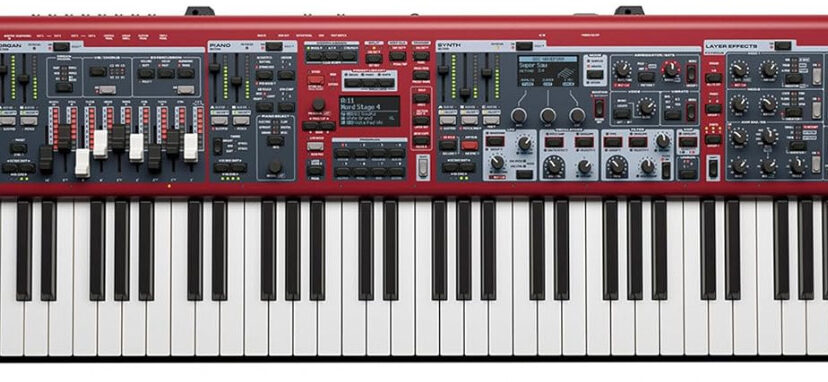
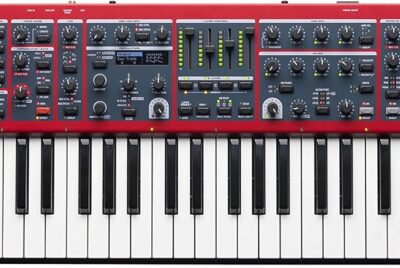
The Nord Stage 4 is one of the most recognizable professional stage keyboards available today.
Its bright red chassis is easy to spot on concert stages, in churches, studios, touring rigs, and professional keyboard setups around the world.
But appearance isn’t what makes the Stage 4 interesting.
What sets it apart is the way Nord combines three major instrument sections—Piano, Organ, and Synth—into one performance-focused keyboard, with extensive hands-on controls and very little dependence on deep menu navigation.
The Stage 4 is also expensive.
That raises the obvious question:
Is the Nord Stage 4 really worth paying a premium for in 2026?
For the right player, yes.
For everyone else, probably not.
This review looks at what the Nord Stage 4 does particularly well, where it falls short, which of its three versions makes the most sense, and who should—and should not—buy one.
Stage keyboards are only one part of the much broader keyboard market. Our complete piano keyboard buying guide explains how digital pianos, portable keyboards, performance instruments and other keyboard types differ.
Nord Stage 4 at a Glance
| Feature | Nord Stage 4 |
|---|---|
| Available versions | Stage 4 88, Stage 4 73, Stage 4 Compact |
| Piano section | 2 independent layers |
| Organ section | 2 independent layers |
| Synth section | 3 independent layers |
| Piano memory | 2 GB |
| Sample memory | 1 GB |
| Piano polyphony | Up to 120 voices |
| Synth polyphony | Up to 46 voices |
| Synth engine | Based on Nord Wave 2 |
| Organ models | B3, Vox, Farfisa, Pipe Organ |
| Splits | Up to 4 keyboard zones |
| Aftertouch | Yes |
| Physical drawbars | Yes |
| MIDI | 5-pin MIDI + USB-MIDI |
| Built-in speakers | No |
| Best for | Professional live performers |
Quick Verdict
The Nord Stage 4 is one of the strongest all-in-one performance keyboards for musicians who regularly need piano, organ, synth, layers, splits, and real-time control on stage.
Its major strengths are:
- Excellent acoustic and electric piano library
- Strong organ emulations
- Nord Wave 2-based synth engine
- Multiple independent sound layers
- Dedicated effects for each layer
- Physical drawbars
- Excellent split/layer workflow
- Aftertouch
- Strong MIDI capabilities
- Extensive hands-on control
- Replaceable piano and sample libraries
- Three keyboard configurations
Its weaknesses are equally important:
- High price
- No built-in speakers
- No workstation-style sequencer
- No audio interface over USB
- Limited appeal for players who mainly need piano
- More complexity than most beginners need
If you’re a professional performer who needs one keyboard to cover a large number of roles, the Stage 4 is exceptionally capable.
If you mainly want a realistic digital piano for home use, you’re probably paying for a lot of features you won’t use.
[Check Nord Stage 4 Price on Amazon →]
Affiliate Disclosure
Some links on Pianos-Galore are affiliate links. If you purchase through these links, we may receive a small commission at no additional cost to you.
What Is the Nord Stage 4?
The Stage 4 is Nord’s flagship stage keyboard.
Unlike a conventional digital piano, it isn’t designed merely to reproduce the experience of playing an acoustic grand.
Instead, it combines three separate sound systems:
- Piano
- Organ
- Synthesizer
Each can be layered, split, processed, and controlled independently.
That makes the Stage 4 closer to a complete live-performance workstation—although it should not be confused with a workstation keyboard in the traditional sequencing sense.
Its priorities are:
- Immediate performance control
- Fast sound changes
- Layering
- Splitting
- Live sound manipulation
- MIDI integration
- Professional connectivity
The design philosophy is clear:
You should be able to control most important functions without diving through pages of menus while performing.
That is one of the Stage 4’s biggest advantages.
If you’re still deciding whether you need a professional stage keyboard or a more conventional home instrument, our Digital Pianos in 2026: The Complete Guide Before You Buy explains the major digital-piano categories and the features that matter most.
The Three Nord Stage 4 Versions
One of the first decisions is choosing the right keybed.
There are three versions.
Nord Stage 4 88
The Stage 4 88 uses an 88-key triple-sensor hammer-action keyboard with aftertouch.
This is the version we’d recommend to players whose work involves significant amounts of:
- Acoustic piano
- Electric piano
- Classical repertoire
- Ballads
- Piano-heavy worship music
- Jazz piano
It weighs approximately 43 pounds.
That isn’t unusually heavy for a professional 88-key stage instrument, but frequent gigging musicians will still need to consider transport.
Best for:
Pianists who want the full Stage 4 feature set without compromising on an 88-key hammer-action layout.
Nord Stage 4 73
The Stage 4 73 also uses a triple-sensor hammer-action keyboard with aftertouch.
This is important because it’s sometimes incorrectly described as semi-weighted.
It isn’t.
You still get hammer action, but in a more compact 73-key format.
At around 37 pounds, it saves both size and weight compared with the 88.
Best for:
Players who want genuine hammer action but don’t need the full 88-key range.
For many gigging musicians, this may actually be the sweet spot.
Nord Stage 4 Compact
The Compact is very different.
It has 73 semi-weighted waterfall keys with aftertouch.
That makes it significantly lighter—approximately 23 pounds—and better suited to organ and synthesizer techniques.
Waterfall keys are particularly useful for:
- Organ glissandos
- Fast synth playing
- Repeated notes
- Palm smears
- Lightweight touring setups
Best for:
Organists, synth players, and performers who prioritize portability over piano-style hammer action.
If you’re unsure whether you really need the Stage 4 88 rather than one of the 73-key versions, our guide to whether you really need 88 weighted keys explains how keyboard range and action affect different styles of playing.
Piano Section
The Stage 4’s Piano section is one of the main reasons musicians buy it.
It provides 2 GB of dedicated piano memory, and the sounds can be replaced using Nord Sound Manager.
This isn’t simply a fixed collection of factory presets.
You can load different instruments from Nord’s Piano Library depending on your preferences and available memory.
Categories include:
- Grand pianos
- Upright pianos
- Electric pianos
- Digital pianos
- Clavinets
- Harpsichords
- Layered piano sounds
Two Independent Piano Layers
The Stage 4 can run two Piano layers simultaneously.
That means you might combine:
- Acoustic piano + electric piano
- Grand piano + pad-like piano layer
- Two differently voiced electric pianos
You can control their levels independently.
For performance setups, this is extremely useful.
String Resonance and Pedal Noise
Nord includes features intended to increase realism for acoustic-piano sounds.
These include:
- Advanced String Resonance
- Dynamic Pedal Noise
- Soft Piano Release
String Resonance models the way undamped strings interact sympathetically.
Pedal Noise adds mechanical and acoustic characteristics associated with the sustain pedal.
These details don’t necessarily matter in every performance environment, but they can improve realism for players using the Stage 4 as a serious piano instrument.
Piano Polyphony
The Stage 4 provides up to 120 voices of piano polyphony.
That is generally sufficient for complex piano performance, including sustained passages and layered sounds.
But remember that polyphony isn’t simply a number to compare in isolation.
How samples are constructed and how multiple layers behave also matter.
For most stage use, 120 voices should be more than adequate.
Organ Section
The Organ section is another major reason professional performers choose Nord.
The Stage 4 includes emulations of:
- B3 tonewheel organ
- B3 Bass
- Vox Continental
- Farfisa
- Two Pipe Organ models
All three Stage 4 models include physical drawbars with LED indicators.
This is an important upgrade.
Previous Nord Stage generations relied more heavily on LED-style drawbar controls on some models.
Physical drawbars make organ performance feel much more immediate.
You can literally grab and move drawbars while playing.
Why Physical Drawbars Matter
Organ playing is highly interactive.
Players often adjust registrations continuously rather than simply selecting a preset and leaving it unchanged.
Physical drawbars make it easier to:
- Build registrations
- Change tone while performing
- Add or remove harmonics
- Manipulate B3-style sounds naturally
For serious organ players, this is much more satisfying than menu-based control.
Rotary Speaker Simulation
The Stage 4 also includes an enhanced rotary-speaker simulation.
This is essential for convincing B3-style organ performance.
You can control speed and overdrive, and the model includes options intended to simulate different microphone positions.
Again, this is an example of Nord emphasizing live usability rather than simply providing an organ preset.
Synth Section: Based on the Nord Wave 2
The Stage 4’s synthesizer section is based on the Nord Wave 2 synth engine.
This is one of its biggest upgrades over earlier generations.
The synth provides:
- Analog-style synthesis
- Digital waveforms
- FM
- Sample playback
- Filters
- Envelopes
- LFO
- Arpeggiator
- Unison
- Vibrato
- Extensive real-time control
You can run three independent Synth layers.
That means the Stage 4 can create very sophisticated layered sounds without relying on external hardware.
1 GB Sample Memory
The Stage 4 provides 1 GB of memory for Nord Sample Library content.
Samples can be replaced using Nord Sound Manager.
This is especially useful for performers who need:
- Strings
- Brass
- Choir
- Guitars
- Pads
- Percussion
- Vintage sample instruments
- Custom performance sounds
You can customize the instrument’s sample content rather than being permanently limited to the original factory selection.
Advanced Arpeggiator
Each Synth layer can use an advanced arpeggiator.
Modes include:
- Standard arpeggiation
- Polyphonic
- Gate
Pattern functionality also allows more sophisticated rhythmic behavior.
These functions can synchronize with the Stage 4’s Master Clock.
For electronic, pop, worship, cinematic, and modern stage music, this can be particularly useful.
Layering: One of the Stage 4’s Biggest Strengths
The Stage 4 supports a large number of simultaneous sound layers:
- 2 Organ layers
- 2 Piano layers
- 3 Synth layers
That gives you up to seven active sound layers.
You probably won’t use all seven all the time.
But having them available allows very sophisticated performance setups.
For example:
Layer 1: Grand piano
Layer 2: Electric piano
Layer 3: Warm pad
Layer 4: Strings
Layer 5: Synth brass
Layer 6: Organ
Layer 7: Another organ registration
That’s an extreme example, but it illustrates what’s possible.
Dedicated LED Faders
Each layer has its own dedicated LED level fader.
This is a major workflow improvement.
Rather than navigating menus to balance layers, you can adjust levels directly.
On stage, that matters.
Imagine you’re playing:
- Piano
- Pad
- Strings
During the verse, you want mostly piano.
During the chorus, you bring the pad and strings up.
With dedicated faders, that’s immediate.
This is one of those features that may look small on a specification sheet but becomes extremely valuable during real performance.
Layer Scene
Layer Scene allows you to create two different layer configurations within the same program.
You can then switch between them quickly.
For example:
Scene 1
Piano + pad
Scene 2
Piano + strings + synth brass
Instead of changing to an entirely different program, you can alter the structure of your current sound setup.
For live players, that’s extremely useful.
Keyboard Splits
The Stage 4 supports up to three split points, creating as many as four keyboard zones.
You can assign different sounds across different regions.
For example:
Lower zone: Synth bass
Middle zone: Electric piano
Upper zone: Organ
Split crossfades can also soften the transition between zones.
This is much more sophisticated than a simple hard keyboard split.
Morphing
Nord’s Morph system lets you control sound parameters dynamically using:
- Modulation Wheel
- Control Pedal
- Aftertouch
One controller can change several parameters simultaneously.
For example, pushing the modulation wheel forward could:
- Increase pad volume
- Open a synth filter
- Increase reverb
- Change an organ parameter
This makes performances considerably more expressive.
Effects
The Stage 4 provides a dedicated effects setup for each layer.
This is another major strength.
Available effects include:
- Tremolo
- Auto Pan
- Ring Modulation
- Wah
- Auto-Wah
- Pump
- Phaser
- Flanger
- Vibe
- Chorus
- Ensemble
- Spin
- Delay
- Amp simulations
- Tube overdrive
- EQ
- Compression
- Rotary Speaker
- Reverb
Reverb options include:
- Spring
- Booth
- Room
- Stage
- Hall
- Cathedral
Having separate effects for layers greatly expands the possibilities for complex sound design.
Is the Stage 4 Good for Piano?
Yes—particularly the 88- and 73-key hammer-action versions.
The combination of:
- Triple-sensor action
- Piano Library
- String Resonance
- Pedal Noise
- 120-note polyphony
- Replaceable piano samples
makes it a highly capable stage piano.
But there is an important distinction.
If acoustic piano is your only priority, you may not need the Stage 4.
You’re paying for:
- Organ engine
- Synth engine
- Extensive effects
- MIDI
- Layers
- Splits
- Drawbars
- Performance controls
A dedicated digital or stage piano may provide better value for a piano-focused user.
Players buying primarily for classical repertoire may want to compare the Stage 4 with the instruments in our guide to digital pianos for classical music practice, where keyboard action, pedal control and acoustic-piano realism take priority over stage versatility.
Is the Stage 4 Good for Organ?
Very much so.
The physical drawbars, B3 modeling, rotary simulation, Vox/Farfisa models, and waterfall action option on the Compact make it one of the stronger all-in-one stage keyboards for organ players.
Serious organists who also need piano and synth sounds are among the most logical Stage 4 buyers.
Is the Stage 4 Good for Synthesizer Playing?
Yes.
Its Wave 2-derived synth section is far more than a token synth added onto a digital piano.
With three independent layers, sample playback, multiple oscillator types, FM, advanced arpeggiation, filters, envelopes, and extensive real-time controls, it can handle sophisticated synth work.
However, dedicated synthesizer enthusiasts may still prefer an instrument like the Nord Wave 2 if synthesis is their primary focus.
Nord Stage 4 vs Nord Wave 2
This comparison matters because the Stage 4’s synth section is based on the Wave 2.
So why buy one instead of the other?
Choose the Stage 4 If:
- You need professional acoustic pianos
- You need electric pianos
- You need organ
- You want synthesis too
- You want one all-purpose professional stage keyboard
- You need hammer-action options
Choose the Wave 2 If:
- Synthesis is your main priority
- You don’t need dedicated piano and organ engines
- You want a more specialized synth workflow
- You prefer a lighter 61-key performance synth
The Stage 4 is the broader instrument.
The Wave 2 is the more specialized synthesizer.
Nord Stage 4 vs Yamaha CP88
The Yamaha CP88 is another strong professional stage-piano option.
But the two instruments approach performance differently.
The CP88 is more focused around:
- Acoustic piano
- Electric piano
- Stage-keyboard simplicity
The Stage 4 provides a much broader architecture:
- Dedicated organ engine
- Three-layer synth engine
- More elaborate layers
- Physical drawbars
- Extensive morphing
- More complex split setups
If piano is your main concern, the CP88 deserves serious consideration.
If you need piano + organ + synth in one instrument, the Stage 4 is considerably more flexible.
Pianists who don’t need the Stage 4’s extensive organ and synthesizer architecture can also compare Yamaha’s 88-key weighted keyboards, which range from compact home instruments to premium piano-focused models.
Nord Stage 4 vs Nord Piano
Another important comparison is Nord’s own Piano series.
The Nord Piano is more focused.
It centers around:
- Piano performance
- Piano samples
- Weighted action
- Some sample-synth capabilities
The Stage 4 adds substantially more:
- Organ
- Full synth engine
- More layers
- More live-performance architecture
- Drawbars
- More extensive splits
- Greater sound-design flexibility
If you’re primarily a pianist, the Nord Piano may be the more logical purchase.
If you’re a multi-role keyboardist, the Stage 4 becomes much more compelling.
Is the Nord Stage 4 Good for Worship Music?
Yes, and this is one area where the Stage 4’s architecture makes a lot of sense.
Modern worship keyboard parts often combine:
- Piano
- Pads
- Strings
- Synth textures
- Organ
- Effects
The ability to layer these sounds, adjust them live, and switch between Layer Scenes can make the Stage 4 particularly effective in worship settings.
The 88 or 73 hammer-action versions are likely the most natural choices if acoustic piano is important.
Is the Nord Stage 4 Good for Gigging?
Absolutely.
Gigging is what it was designed for.
Features that make it particularly suitable include:
- Rapid sound selection
- Dedicated layer controls
- Physical drawbars
- Splits
- Layer Scene
- Live Programs
- Extensive pedal control
- MIDI
- Robust physical interface
The Compact is particularly attractive to players who travel frequently because of its much lower weight.
What About Studio Use?
The Stage 4 can work very well in a studio.
You can use it:
- As a MIDI controller
- As a high-end sound source
- For piano recordings
- For organ parts
- For synth layers
- For live performance tracking
However, it isn’t designed to replace a DAW.
There is no full workstation-style sequencer.
And the USB connection is primarily for MIDI, sound management, and software-related functions rather than functioning as a complete multichannel USB audio interface.
Connections
The Stage 4 provides a strong set of professional connections.
These include:
- Four assignable audio outputs
- Headphone output
- Monitor input
- MIDI In
- MIDI Out
- USB
- Sustain pedal input
- Triple pedal connection
- Rotor pedal input
- Organ swell pedal input
- Control pedal input
- Footswitch input
This is clearly designed for serious live setups.
No Built-In Speakers
None of the Stage 4 models includes built-in speakers.
That isn’t a flaw so much as a consequence of its intended use.
Professional performers normally connect to:
- PA systems
- Powered monitors
- Keyboard amplifiers
- Studio monitors
- Audio interfaces
If you’re buying a keyboard exclusively for casual home playing, the lack of speakers may be inconvenient.
Pros and Cons
Pros
Excellent all-in-one performance architecture
Piano, organ, and synthesizer sections cover an enormous range of professional needs.
Superb live workflow
Dedicated controls, faders, drawbars, and clear sections reduce menu dependence.
Strong piano library
Nord’s replaceable Piano Library remains a major advantage.
Excellent organ section
Physical drawbars and strong organ modeling are particularly useful.
Wave 2-based synth engine
Far more powerful than the synth sections found on many stage pianos.
Multiple independent layers
Extremely flexible for complex performances.
Aftertouch
Adds expressive control.
Flexible splits
Up to four zones.
Replaceable sounds and samples
The instrument can evolve as Nord releases new library content.
Three keyboard configurations
Players can choose piano feel, compact hammer action, or waterfall action.
Cons
Expensive
Many musicians simply don’t need this much keyboard.
No built-in speakers
External monitoring is necessary.
No workstation sequencer
Not intended for self-contained multitrack production.
Complex for beginners
A new pianist can use it, but its feature set is excessive for basic piano learning.
The 88 is relatively heavy
Frequent gigging requires proper transportation.
Who Should Buy the Nord Stage 4?
The Stage 4 makes the most sense for:
- Professional keyboardists
- Touring musicians
- Worship keyboardists
- Musical-theater players
- Session musicians
- Multi-instrument keyboard performers
- Organ/piano/synth players
- Players who frequently create complex live layers and splits
If you’re not yet sure whether your needs point toward a piano-focused instrument or a more versatile keyboard, start with our digital piano vs keyboard comparison before moving into professional models like the Stage 4.
Who Should NOT Buy It?
Look elsewhere if:
- You’re just beginning piano
- You only need acoustic piano sounds
- You want built-in speakers
- You need a budget instrument
- You need a full workstation/sequencer
- You rarely perform live
- You don’t use organ or synth features
Buying the most capable instrument isn’t automatically the smartest choice.
If the Stage 4’s premium price puts it beyond what you actually need, our guide to the best digital pianos for every budget shows what you can expect at lower price levels without paying for professional organ, synth and stage-performance features.
Which Nord Stage 4 Should You Buy?
Choose Stage 4 88 If:
- You’re primarily a pianist
- You want 88 keys
- You play classical, jazz, or piano-heavy material
- Weight is less important than full range
Choose Stage 4 73 If:
- You want hammer action
- You want something smaller than an 88
- You gig regularly
- 73 keys are enough for your repertoire
Choose Stage 4 Compact If:
- Organ is a major priority
- You prefer synth-style playing
- Portability matters
- You want waterfall keys
- You frequently transport your keyboard
Frequently Asked Questions
Is the Nord Stage 4 worth it in 2026?
For professional players who regularly need piano, organ, synthesis, layering, splits, MIDI, and hands-on control, yes. For players needing only piano, there are more cost-effective options.
Does the Nord Stage 4 have weighted keys?
The Stage 4 88 and 73 use triple-sensor hammer-action keyboards. The Compact uses a semi-weighted waterfall action.
Does the Nord Stage 4 have aftertouch?
Yes. All three versions support aftertouch.
Does the Stage 4 have physical drawbars?
Yes. All three models include physical drawbars with LED indicators.
How many piano layers can you use?
Two.
How many synth layers can you use?
Three.
What is the piano polyphony?
Up to 120 voices.
What is the synth polyphony?
Up to 46 voices.
Does the Stage 4 have built-in speakers?
No.
Can it connect to a DAW?
Yes. It supports MIDI over USB and conventional MIDI connections.
Does it have a sequencer?
It doesn’t provide the type of full multitrack sequencer found in traditional workstation keyboards.
Can you load new piano sounds?
Yes. Piano sounds can be replaced through Nord Sound Manager.
Can you load samples?
Yes. The Stage 4 supports Nord Sample Library content and custom sample management.
Nord Stage 4 Review: Final Verdict
The Nord Stage 4 isn’t inexpensive, and it isn’t designed to be the best possible keyboard for every musician.
Its real strength is versatility without sacrificing live control.
Many keyboards can produce piano, organ, and synth sounds.
Far fewer make all three categories this accessible during an actual performance.
The Stage 4 gives you:
- Two Piano layers
- Two Organ layers
- Three Synth layers
- Physical drawbars
- Dedicated layer faders
- Separate effects
- Advanced splits
- Morphing
- Aftertouch
- Strong MIDI capabilities
- Replaceable sound libraries
That makes it particularly valuable to musicians who need to move quickly between different roles on stage.
A pianist might play grand piano during one song, electric piano and pad during the next, Hammond-style organ in another, and a complex synth layer later in the set.
The Stage 4 is built for exactly that kind of musician.
If you only need a digital piano, buy a digital piano.
If synthesis is your main priority, a specialized synth may make more sense.
But if you need piano, organ, synth, effects, layers, and professional live controls in one keyboard, the Nord Stage 4 remains one of the most complete performance instruments available in 2026.
[Check Nord Stage 4 Price on Amazon →]
Related Articles
- Best Nord Keyboards in 2026: Which Nord Is Right for You?
- Nord Wave 2 Review 2026: Is This Performance Synth Still Worth It?
- Best Digital Pianos by Skill Level in 2026: Beginner to Advanced
- Best 88-Key MIDI Keyboards & Digital Pianos in 2026: 6 Top Picks
==========