Best Piano Brands in 2026: 10 Top Names Compared

Choosing a piano brand can be almost as difficult as choosing the piano itself.
Yamaha or Kawai?
Roland or Casio?
Steinway or Bösendorfer?
And where do brands such as Nord, Donner and Fazioli fit into the picture?
The answer depends heavily on what kind of pianist you are—and even on what you mean by “piano.”
Some manufacturers specialize in handcrafted acoustic grand pianos costing tens of thousands of dollars. Others lead the digital-piano market. Some build instruments for concert stages, while others specialize in affordable pianos for beginners.
That’s why there really isn’t one universally “best” piano brand.
Instead, we’ve selected 10 important piano brands, each with a particular strength:
- Yamaha — Best All-Round Piano Brand
- Kawai — Best for Piano-Focused Digital & Acoustic Players
- Roland — Best Digital Piano Technology
- Casio — Best for Value & Compact Digital Pianos
- Steinway & Sons — Best Prestige Acoustic Piano Brand
- Bösendorfer — Best for Rich European Grand-Piano Character
- Fazioli — Best Boutique Concert Grand Brand
- Nord — Best for Professional Stage Players
- Donner — Best Budget Digital Piano Brand
- Korg — Best for Musicians & Stage-Oriented Players
This guide explains what each company does particularly well, who should consider it, and why choosing a brand should be the beginning of your search—not the end of it.
Disclosure: Some links on Pianos-Galore are affiliate links. If you purchase through these links, we may receive a small commission at no additional cost to you.
Best Piano Brands at a Glance
| Brand | Particularly Strong In | Best For |
|---|---|---|
| Yamaha | Acoustic + Digital | Most Pianists |
| Kawai | Acoustic + Digital | Piano-Focused Players |
| Roland | Digital Pianos | Technology & Piano Modeling |
| Casio | Digital Pianos/Keyboards | Value & Compact Designs |
| Steinway & Sons | Acoustic Grands | Prestige/Concert Pianos |
| Bösendorfer | Premium Acoustic Grands | European Grand-Piano Character |
| Fazioli | Handcrafted Grands | Boutique Concert Instruments |
| Nord | Stage Instruments | Professional Performers |
| Donner | Affordable Digitals | Budget Buyers |
| Korg | Digital/Stage Instruments | Performing Musicians |
These companies shouldn’t be viewed as ten manufacturers competing to make exactly the same product.
They aren’t.
Someone shopping for their child’s first digital piano probably shouldn’t be comparing a Donner DEP-20 with a Steinway concert grand.
Likewise, a professional touring keyboardist may value features that are irrelevant to someone buying a traditional upright piano for their living room.
Let’s look at each brand in context.
1. Yamaha — Best All-Round Piano Brand
If I had to recommend one piano manufacturer for the widest possible range of buyers, Yamaha would be extremely difficult to beat.
Yamaha produces an unusually broad spectrum of instruments, including:
- Portable keyboards
- Entry-level digital pianos
- Premium digital pianos
- Console digital pianos
- Stage instruments
- Upright acoustic pianos
- Grand pianos
- Concert grands
- Hybrid pianos
That range is one of Yamaha’s greatest strengths.
A child can begin on an inexpensive Yamaha keyboard, move to a P-Series digital piano, eventually buy an acoustic upright and potentially progress all the way to a professional grand—without ever leaving the brand.
Yamaha Digital Pianos
Yamaha’s digital range includes several major families.
P Series
Portable digital pianos aimed at everyone from beginners to advanced players.
Examples include the Yamaha P-225 and premium P-525.
Arius
Furniture-style home digital pianos designed to provide a more traditional appearance.
Clavinova
Yamaha’s premium home digital-piano family.
AvantGrand
Hybrid instruments combining sophisticated acoustic-piano-inspired actions with digital sound technology.
Yamaha Acoustic Pianos
Yamaha is equally significant in acoustic instruments.
Its range spans uprights through professional grands and concert instruments.
This gives Yamaha an advantage that many digital-only manufacturers simply don’t have: expertise across both sides of the piano industry.
Why Choose Yamaha?
Consider Yamaha if you want:
- A widely established manufacturer
- Strong acoustic-piano heritage
- Large product selection
- Beginner-to-professional options
- Digital and acoustic choices
- Broad dealer/service support
- Proven piano technology
Best for:
Almost anyone—from first-time beginners to advanced pianists.
Yamaha Pianos: A Legacy of Excellence
Best Yamaha Digital Pianos in 2026: 5 Top Picks for Every Player
2. Kawai — Best for Piano-Focused Digital & Acoustic Players
Kawai is another company with genuine strength in both acoustic and digital pianos.
Founded in Japan, Kawai has built a particularly strong reputation among pianists who place keyboard action and traditional piano playing near the top of their priorities.
Kawai Acoustic Pianos
Kawai manufactures:
- Upright pianos
- Grand pianos
- Professional instruments
- Shigeru Kawai premium grands
The company has also been an innovator in action materials.
Its acoustic Millennium III actions, for example, use advanced composite materials in selected components.
Kawai Digital Pianos
Kawai’s digital instruments benefit from the company’s acoustic-piano background.
Important product families include:
- ES portable digital pianos
- CN home digital pianos
- CA premium digital pianos
- Novus hybrid instruments
The Kawai ES120 is a strong example of its accessible portable approach, while the ES920 moves into a considerably more sophisticated category.
Kawai digital instruments may incorporate sampled sounds derived from instruments such as the Shigeru Kawai SK-EX concert grand.
Why Choose Kawai?
Consider Kawai if your priorities include:
- Traditional piano playing
- Acoustic-piano heritage
- Responsive keyboard actions
- Classical music
- Piano-focused digital instruments
- Warm, expressive piano character
Best for:
Students and experienced pianists who prioritize piano touch and tone over having the longest possible feature list.
Kawai Pianos: Crafting Musical Excellence Since 1927
3. Roland — Best Digital Piano Technology
Roland occupies a different position.
Unlike Yamaha and Kawai, Roland isn’t primarily an acoustic-piano manufacturer.
Its strength is electronic musical-instrument technology.
That makes Roland particularly interesting if you’re shopping specifically for a digital piano.
Roland FP Series
The FP family includes some of the company’s most popular portable digital pianos.
Examples include:
Roland FP-10
A strong entry-level instrument with PHA-4 Standard action.
Roland FP-30X
A step-up model with stronger amplification, more polyphony and broader connectivity.
Roland FP-90X
A premium model using Roland’s PHA-50 hybrid action and advanced piano modeling.
Piano Modeling
Roland has invested heavily in modeling technology rather than relying solely on conventional sample playback.
Its higher-end instruments use increasingly sophisticated modeling systems to recreate characteristics of acoustic-piano sound and resonance.
Connectivity
Roland also tends to be strong in areas such as:
- Bluetooth
- USB
- MIDI
- Audio connectivity
- Music-app integration
This makes its digital pianos particularly appealing to modern home musicians.
Why Choose Roland?
Consider Roland if you want:
- Strong digital-piano technology
- Well-regarded hammer actions
- Piano modeling
- Modern connectivity
- Portable and home digital options
- Instruments suitable for practice and performance
Best for:
Players specifically seeking a digital piano rather than an acoustic instrument.
Top Roland Digital Pianos for 2026: Cutting-Edge Technology
4. Casio — Best for Value & Compact Digital Pianos
Many people first encounter Casio through affordable electronic keyboards.
But limiting Casio to “beginner keyboards” seriously understates what the company now offers.
Casio manufactures everything from inexpensive portable keyboards to sophisticated digital pianos.
Casio Privia
The Privia line has become particularly important.
Its strength is combining:
- 88-key hammer action
- Slim dimensions
- Low weight
- Modern styling
- Competitive pricing
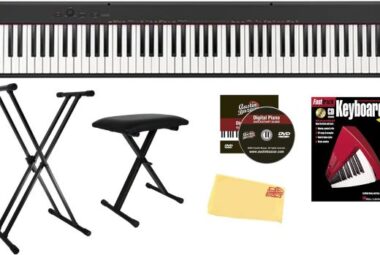
The Casio PX-S1100, for example, demonstrates how compact a full 88-key hammer-action digital piano can be.
Casio Portable Keyboards
Casio also remains very strong at the entry level.
Models such as the CT-S300 provide touch-sensitive keys, hundreds of sounds, rhythms and portability at accessible prices.
This makes Casio particularly relevant for:
- Children
- First-time beginners
- Families
- Casual players
- Space-conscious musicians
Why Choose Casio?
Consider Casio if you want:
- Strong value
- Compact dimensions
- Beginner-friendly keyboards
- Slim digital pianos
- Portable instruments
- Lots of functionality for the money
Best for:
Beginners, apartment dwellers and value-conscious digital-piano buyers.
5. Steinway & Sons — Best Prestige Acoustic Piano Brand
Few piano names carry the cultural recognition of Steinway & Sons.
Founded in New York in 1853, Steinway became closely associated with professional concert performance and premium acoustic piano manufacturing.
Unlike Roland, Casio or Donner, Steinway isn’t relevant because it makes an affordable digital piano.
Its reputation rests on traditional acoustic grands and uprights.
Why Steinway Is So Famous
Steinway’s reputation was built through:
- Acoustic-piano craftsmanship
- Concert instruments
- Extensive use by professional pianists
- Long manufacturing history
- Design patents and innovations
- Presence in major performance venues
Its concert grand has become one of the most recognizable professional pianos in the world.
Is Steinway Automatically the Best Piano?
No.
At this level, personal preference becomes extremely important.
Professional pianists can have strong preferences for Steinway, Bösendorfer, Fazioli, Yamaha, Shigeru Kawai and other premium instruments.
Two individual acoustic grands from the same manufacturer may even feel and sound somewhat different.
That’s why advanced pianists should play the actual instrument before buying whenever possible.
Why Choose Steinway?
Consider Steinway if:
- You’re shopping for a premium acoustic piano.
- Concert-level performance matters.
- Heritage and craftsmanship matter.
- Resale recognition is important.
- You want one of the world’s most established piano names.
Best for:
Serious acoustic-piano buyers, institutions and professional pianists.
6. Bösendorfer — Best for Rich European Grand-Piano Character
Bösendorfer occupies one of the most prestigious positions in European piano making.
Founded in Vienna in 1828, the company is especially associated with handcrafted premium grand pianos.
Today, Bösendorfer is part of Yamaha while retaining its distinctive Austrian identity and manufacturing tradition.
What Makes Bösendorfer Different?
Bösendorfer pianos are often associated with a rich, complex and singing tonal character.
Some of its most famous models also extend beyond the conventional 88-key piano range.
The Imperial, for example, has 97 keys, extending the bass downward.
Those extra bass strings can contribute to the resonance of the entire instrument even when the additional notes aren’t being played directly.
Who Should Buy One?
A Bösendorfer isn’t a practical recommendation for the typical beginner.
It’s a specialist luxury instrument.
Consider one if:
- You’re an advanced pianist.
- You’re buying a premium grand.
- Tonal character is extremely important.
- You can compare multiple high-end acoustic instruments in person.
- Budget isn’t the primary constraint.
Best for:
Advanced pianists seeking a distinctive premium European grand-piano experience.
7. Fazioli — Best Boutique Concert Grand Brand
Fazioli is much younger than Steinway or Bösendorfer.
The Italian company was established in the late 20th century, yet it has earned a formidable reputation in the premium concert-grand market.
Fazioli focuses on high-end grand pianos rather than trying to compete across every price category.
That specialization is part of its identity.
Why Fazioli Stands Out
Fazioli is associated with:
- Limited production
- Hand craftsmanship
- Premium materials
- Concert-level instruments
- Meticulous manufacturing
- Distinctive tonal character
Its instruments appear in concert venues, recording environments and international piano competitions.
Is Fazioli Better Than Steinway?
That’s the wrong question.
At this level, there isn’t a universally correct hierarchy.
A concert pianist may prefer one instrument for:
- Touch
- Tone
- Dynamic range
- Repertoire
- Venue acoustics
- Personal playing style
The better question is:
Which individual grand responds best to you?
Best for:
Professional and serious pianists considering boutique, world-class acoustic grands.
8. Nord — Best for Professional Stage Players
Nord belongs in this article for an entirely different reason.
The Swedish manufacturer isn’t trying to compete with Steinway in acoustic concert grands.
It specializes in professional electronic performance instruments.
Its distinctive red keyboards are common on stages around the world.
Nord’s Strength
Nord instruments are designed around live performance.
Depending on the model, strengths include:
- High-quality piano sounds
- Electric pianos
- Organs
- Synthesizers
- Splits and layers
- Hands-on controls
- Sound libraries
- Professional outputs
The Nord Grand and Nord Stage families are aimed at serious performers rather than traditional acoustic-piano buyers.
Why Choose Nord?
Consider Nord if:
- You perform live.
- You need multiple keyboard sounds.
- Fast sound control matters.
- You play in bands.
- Piano is one part of a larger performance setup.
- You’re willing to pay for professional stage functionality.
Best for:
Touring musicians, stage performers and professional keyboard players.
Nord Piano Series: Uncovering Top Features and Benefits
9. Donner — Best Budget Digital Piano Brand
Donner operates at almost the opposite end of the market from Steinway and Fazioli.
Its appeal is affordability.
Donner has expanded aggressively into digital pianos, offering numerous 88-key instruments at prices aimed largely at beginners and home players.
Examples include:
- Donner DEP-20
- Donner DDP-60
- Donner DDP-80
- Donner DDP-90
- Donner DDP-100S
- Donner DDP-300
Why Donner Has Become Popular
The company frequently offers features such as:
- 88 keys
- Weighted or semi-weighted actions depending on model
- Built-in speakers
- USB-MIDI
- Furniture-style cabinets on some models
- Pedal systems
- Multiple sounds
at relatively aggressive prices.
Where Is the Trade-Off?
Don’t assume a budget Donner is equivalent to a premium Kawai, Yamaha or Roland merely because all of them have 88 keys.
More expensive instruments may offer improvements in:
- Keyboard action
- Sensors
- Piano sampling/modeling
- Pedal response
- Speakers
- Construction
- Long-term support
But for someone who otherwise couldn’t afford an 88-key instrument, Donner can make digital-piano ownership much more accessible.
Best for:
Budget-conscious beginners and home players.
10. Korg — Best for Musicians & Stage-Oriented Players
Korg is another major Japanese electronic-instrument company.
Like Roland, it has deep expertise in electronic keyboards, synthesizers, workstations and performance technology.
Korg’s piano offerings range from accessible digital instruments to more sophisticated stage-oriented products.
Why Musicians Choose Korg
Korg’s broader musical-instrument expertise makes the brand particularly relevant to musicians who want more than traditional piano practice.
The company is known for:
- Synthesizers
- Workstations
- Stage keyboards
- Digital pianos
- Music-production equipment
This makes Korg attractive to:
- Performers
- Producers
- Keyboardists
- Songwriters
- Multi-instrument musicians
Best for:
Musicians who want piano capability combined with broader electronic-keyboard expertise.
Korg Keyboard Pianos: The Best Models for Every Pianist
Yamaha vs Kawai: Which Brand Is Better?
This is one of the most common piano-brand comparisons.
Both companies manufacture:
- Acoustic uprights
- Acoustic grands
- Digital pianos
- Premium home instruments
- Hybrid instruments
And both have strong reputations.
Choose Yamaha If:
- You want an enormous product range.
- Portability matters.
- You like Yamaha’s piano sound.
- You want strong digital and acoustic choices.
- You value widespread brand/dealer support.
Choose Kawai If:
- Keyboard action is a major priority.
- You’re especially piano-focused.
- You like Kawai’s tonal character.
- Classical playing is important.
- You want an acoustic-piano company with strong digital products.
There isn’t a universal winner.
Play both if possible.
Yamaha vs Roland: Which Is Better for Digital Pianos?
This comparison is different.
Yamaha brings extensive acoustic-piano manufacturing experience into digital instruments.
Roland brings decades of electronic musical-instrument expertise.
Yamaha
Particularly strong in:
- Acoustic-derived piano sounds
- Broad piano range
- Home instruments
- Portable digital pianos
- Acoustic-to-digital continuity
Roland
Particularly strong in:
- Piano modeling
- Digital keyboard actions
- Connectivity
- Performance technology
- Electronic integration
Again, neither is automatically better.
The right choice depends on which action and sound you prefer.
Roland vs Kawai: Which Should You Buy?
For piano students, this can be an especially interesting comparison.
Roland instruments such as the FP-30X emphasize a combination of hammer action, digital modeling and connectivity.
Kawai instruments such as the ES120 and ES920 place a strong emphasis on traditional piano feel and sampled acoustic-piano character.
A serious student should ideally play both.
Specifications can narrow your shortlist.
Your fingers should make the final decision.
Casio vs Donner: Which Is Better for Beginners?
Both brands can appeal to value-conscious buyers, but they occupy somewhat different territory.
Casio has a long history in electronic keyboards and offers everything from beginner portable instruments to sophisticated Privia digital pianos.
Donner has become particularly aggressive in affordable 88-key digital pianos and furniture-style home models.
Consider Casio if:
- Compactness matters.
- You want a highly established electronics/keyboard manufacturer.
- You like the Privia design approach.
Consider Donner if:
- Budget is extremely important.
- You want lots of features for the money.
- You’re looking for an affordable 88-key home instrument.
Acoustic Piano Brands vs Digital Piano Brands
This is an important distinction.
Some brands are strong in both categories:
Yamaha
Kawai
Others are primarily known for premium acoustic instruments:
Steinway & Sons
Bösendorfer
Fazioli
Others specialize primarily in electronic instruments:
Roland
Casio
Nord
Donner
Korg
That means asking:
“What’s the best piano brand?”
isn’t specific enough.
First decide:
Acoustic or digital?
Then:
Portable or permanent?
Then:
Beginner, intermediate or professional?
Only then should brand become a major factor.
Best Piano Brand for Beginners
For most beginners shopping for a digital piano, I would start with:
Yamaha
Roland
Kawai
Casio
and, for tighter budgets,
Donner.
Don’t choose based on the logo alone.
Compare actual models within your budget.
A premium model from one brand shouldn’t be compared directly with the cheapest instrument from another.
Best Piano Brand for Classical Music
For traditional classical study, Yamaha and Kawai are obvious starting points because both manufacture acoustic and digital pianos.
Roland also deserves serious consideration for digital practice instruments.
At advanced and professional acoustic levels, the conversation expands to include manufacturers such as:
- Steinway & Sons
- Bösendorfer
- Fazioli
- Yamaha
- Shigeru Kawai
At that level, individual instrument selection becomes extremely important.
Best Digital Pianos for Learning Classical Music in 2026
Best Piano Brand for Stage Performance
For professional stage work, consider:
Nord
Roland
Yamaha
Korg
Stage players need to think about factors beyond acoustic-piano realism.
These include:
- Weight
- Audio outputs
- Sound switching
- Splits
- Layers
- Organ sounds
- Electric pianos
- Synth sounds
- MIDI
- External control
- Reliability
The “best” stage instrument can therefore be completely different from the best piano for a classical student.
Best Piano Brand on a Budget
For lower-cost instruments, look particularly at:
Casio
Donner
Alesis
Yamaha
Roland
Notice that Alesis isn’t in our principal Top 10.
That doesn’t mean Alesis makes bad instruments.
A Top 10 list necessarily leaves out worthwhile brands.
The Alesis Recital Pro and Prestige Artist, for example, can offer strong value for buyers seeking affordable hammer-action digital pianos.
The lesson is simple:
Don’t reject a good piano merely because its manufacturer didn’t make an arbitrary Top 10 ranking.
Does Piano Brand Really Matter?
Yes—but not as much as some buyers assume.
A strong brand can give you greater confidence in:
- Quality control
- Warranty
- Replacement parts
- Dealer support
- Product development
- Long-term reputation
But the name on the fallboard doesn’t guarantee that a particular model is right for you.
Consider two pianos from the same company.
One may be an entry-level beginner instrument.
The other may cost several times as much and use completely different action and sound technology.
So compare model against model, not merely brand against brand.
How to Choose a Piano Brand
Use these seven questions.
1. Acoustic or Digital?
This immediately narrows the field.
2. What’s Your Budget?
Be realistic about the complete setup, including:
- Stand
- Bench
- Pedals
- Headphones
- Delivery
where applicable.
3. What’s Your Skill Level?
A beginner doesn’t need concert-level sophistication.
An advanced pianist may find an entry-level action limiting.
4. What Music Do You Play?
Classical, jazz, pop, worship, electronic music and live band work can emphasize different features.
5. Will You Move the Piano?
A portable digital piano and a 9-foot concert grand solve very different problems.
6. Do You Need Technology?
Think about:
- Headphones
- Bluetooth
- MIDI
- Recording
- Apps
- DAWs
- USB audio
7. Which Piano Feels Best?
This is the question people sometimes forget.
If possible, play your shortlist.
Don’t Buy a Piano Brand—Buy the Right Piano
Brand reputation is useful for narrowing your search.
But don’t let it replace actual evaluation.
A pianist may walk into a showroom convinced they want Yamaha and discover they prefer Kawai’s action.
Another may expect to buy Kawai and prefer Roland.
A concert pianist may compare several world-class grands and choose the instrument that responds best to a particular touch.
That’s normal.
Piano preference is personal.
Frequently Asked Questions
What is the best piano brand in 2026?
There isn’t one universally best brand.
For the widest range of players, Yamaha is one of the strongest all-round choices because it offers instruments from beginner digital pianos through professional acoustic grands.
Kawai, Roland, Casio, Steinway, Bösendorfer and others excel in different areas.
What are the best digital piano brands?
Strong digital-piano brands include Yamaha, Roland, Kawai and Casio.
Donner and Alesis are also worth considering for value-conscious buyers, while Nord and Korg are particularly relevant to stage musicians.
What are the best acoustic piano brands?
Premium acoustic manufacturers include Steinway & Sons, Bösendorfer, Fazioli, Yamaha and Kawai/Shigeru Kawai, among others.
Is Yamaha or Kawai better?
Neither is universally better.
Yamaha offers an exceptionally broad range and its own distinctive sound/action technologies.
Kawai has an especially strong piano-focused reputation and is widely respected for its keyboard actions.
Try both whenever possible.
Is Roland a good piano brand?
Yes, particularly for digital pianos.
Roland is well known for digital keyboard actions, piano modeling, connectivity and electronic music technology.
Is Casio a good piano brand?
Yes.
Casio’s modern Privia range goes well beyond inexpensive beginner keyboards and includes serious 88-key hammer-action digital pianos.
Are Donner pianos good for beginners?
They can be attractive to budget-conscious beginners because Donner offers several affordable 88-key models.
More advanced pianists should compare their action, sound and build with higher-tier alternatives.
What piano brand is best for classical music?
For digital practice, Yamaha, Kawai and Roland are strong choices.
For advanced acoustic playing, the field broadens considerably and individual instruments become more important than simple brand rankings.
What piano brand is best for professionals?
It depends on the profession.
A concert classical pianist might consider Steinway, Fazioli, Bösendorfer, Yamaha or Shigeru Kawai.
A touring keyboardist might prefer Nord, Roland, Yamaha or Korg.
Final Verdict: Which Piano Brand Should You Choose?
If you want the shortest possible answer:
Best All-Round — Yamaha
An extraordinary range from beginner digital pianos to professional acoustic instruments makes Yamaha one of the easiest brands to recommend broadly.
Best Piano-Focused Alternative — Kawai
Particularly compelling for pianists who prioritize touch, acoustic-piano heritage and traditional piano playing.
Best Digital Technology — Roland
A strong choice for players interested in sophisticated digital piano actions, modeling and connectivity.
Best Value & Compact Digital Brand — Casio
Excellent for beginners, apartment dwellers and players who value portability.
Best Prestige Acoustic Brand — Steinway & Sons
One of the world’s most recognized names in premium acoustic and concert pianos.
Best European Grand Character — Bösendorfer
A distinctive choice for advanced pianists seeking a handcrafted Austrian grand.
Best Boutique Concert Grand — Fazioli
A specialist manufacturer of high-end Italian grand pianos.
Best Professional Stage Brand — Nord
Particularly strong for touring and performing keyboardists.
Best Budget Digital Brand — Donner
Worth considering when affordability is the primary constraint.
Best for Electronic/Stage Musicians — Korg
A strong option for performers, producers and musicians whose needs extend beyond traditional piano practice.
But remember the most important principle in this entire guide:
Don’t choose a piano because someone told you one brand is “the best.”
Choose the instrument whose action, sound, features, size and price fit you best.
Brand reputation can help you create the shortlist.
Your needs—and ultimately your fingers and ears—should make the final decision.
One of Yamaha’s strengths in the digital piano market is its range of realistic keyboard actions. For a closer examination, see our guide to Yamaha weighted-key technology and 88-key models.
If you are focusing specifically on electronic instruments, our guide to the best digital piano brands compares Yamaha, Roland, Kawai, Casio, Donner and Nord in more detail.
For readers interested in Yamaha but not ready for an 88-key piano, our comparison of portable Yamaha keyboards with 61 keys covers beginner-friendly models with learning and accompaniment features.
Choosing a reputable manufacturer is useful, but brand alone doesn’t determine whether an instrument suits you. Start with the features that matter when choosing a keyboard piano, then compare brands and models.
Related articles:
——————————-
Need a piano learning app? Check out SIMPLY PIANO and play the music you love.

- Start with beginner-friendly tutorials, with advanced courses for seasoned players.
- Learn at your own speed with lessons customized to your level and get instant feedback.
- Play a variety of music from classical to popular and Disney songs. Boost your skills with warm-ups, personalized exercises, and sheet music.
Try out SIMPLY PIANO Now…
——————————–